
Understanding Return on Investment in Remodeling
Resale return describes how much of a remodeling investment is reflected in a home's sale price. It varies with scope, workmanship, property condition, and the local market. Also consider the daily value of better function, comfort, and usable space.
Every kitchen renovation begins with understanding how you use your space. The same principle applies to evaluating ROI: consider both the financial return and the practical value a project delivers while you live in the home.
Kitchen Renovations: Consistent Value Across Price Points
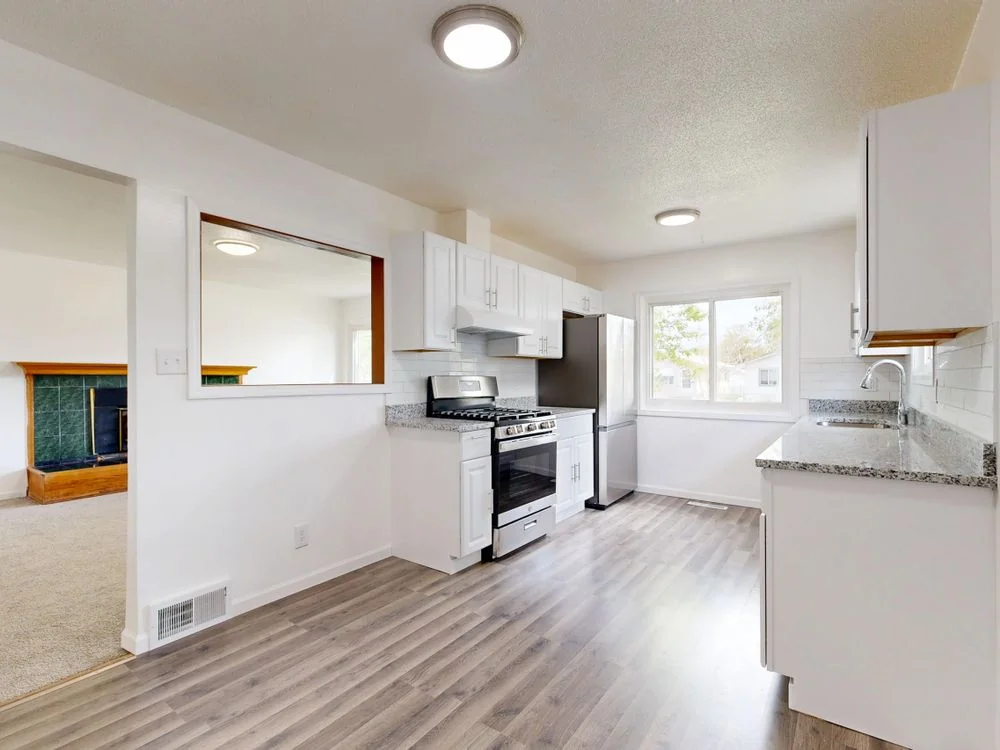
Kitchen updates can improve everyday function and buyer appeal. A focused refresh and a major layout change serve different needs; compare the likely cost and benefit for your home rather than assuming a standard percentage of cost recovery.
The difference comes down to scale and personalization. A minor update refreshes surfaces and improves function without changing the layout. A major renovation may include custom cabinetry, relocated plumbing, structural changes, and high-end finishes that reflect your preferences more than the next buyer's.
That does not mean a major kitchen renovation delivers poor value. If your current kitchen lacks counter space, storage, or a logical work triangle, a complete redesign improves daily cooking, hosting, and family time. The financial return may be lower, but the functional return can be substantial.
We typically start with the plumbing to identify the best location for a sink, dishwasher, or wet bar. That sequence guides layout decisions and helps avoid costly changes later in construction.
Basement Finishing: Adding Livable Square Footage
A finished basement can add usable space within the existing home. Its resale contribution depends on moisture control, permitted use, workmanship, and local buyer expectations. Below-grade space may be valued differently from above-grade rooms.
In Southeastern Wisconsin, a finished basement extends the value of a home through recreation rooms, home theaters, guest suites, home offices, gyms, or additional bedrooms. Buyers compare total finished square footage, and an unfinished basement can limit a home's appeal even when the main level is updated.
We transform underutilized basements into comfortable, inviting spaces designed to fit your family's unique needs. The planning process addresses moisture control, egress requirements for bedrooms, ceiling height, lighting, and HVAC capacity before construction begins.
A finished basement may help a household gain needed space while staying in the same neighborhood and school district. Compare its project-specific cost with the costs and practical implications of an addition or a move.
Home Additions: Expanding Without Moving
An addition can provide bedrooms, a larger kitchen, an office, or a main-floor suite while allowing you to stay in your neighborhood. Its resale value depends on the type and quality of the addition, the existing home, and the local market.
The value of an addition depends on the need it addresses. Adding a missing bathroom or bedroom may appeal to different buyers than a sunroom or a highly customized suite. Discuss the options with a local real estate professional if resale is a priority.
Most home addition projects require permits. We help manage the permitting process, coordinate structural engineering when needed, and ensure the new space integrates with your existing floor plan, roofline, exterior materials, and mechanical systems.
The decision to build an addition often reflects long-term plans. If you intend to stay in the home for another five to ten years, the value comes from living in the expanded space, not just the resale price.
Bathroom Renovations: High Impact in Homes with Dated or Insufficient Bathrooms
Updating a dated bathroom or adding a needed one can improve comfort and buyer appeal. The financial result depends on project scope, finish choices, the home's existing bathrooms, and local market expectations.
A bathroom renovation may include tile, vanities, lighting, toilets, tubs, or showers. Moving plumbing or changing the layout can increase costs, so weigh those changes against improved comfort, accessibility, and function.
Clients can select their desired material and see how that selection affects their budget instantly. That transparency helps homeowners balance finish quality, project scope, and overall investment.
Whole-Home Renovations: When Multiple Systems Need Attention
Whole-home renovations can address aging systems, outdated layouts, and deferred maintenance. Their value should be assessed as a complete project: compare the investment with the home's condition, neighborhood, and your long-term plans.
A whole-home remodel makes sense when you plan to stay in the home for many years, when the cost of selling and moving exceeds the renovation investment, or when the home's location, lot, or neighborhood offers value that a comparable move-in-ready home does not.
The coordination challenge in a whole-home renovation is significant. Our in-house team of designers, project managers, carpenters, and drafting and production staff works under one roof, so you have one contract, one point of accountability, and one project schedule.
Factors That Influence ROI Beyond Project Type
Neighborhood and Market Conditions
A $100,000 kitchen renovation in a neighborhood where most homes sell for $250,000 may price the home above comparable properties. The same kitchen in a $500,000 neighborhood may be expected by buyers and recover a higher percentage of its cost.
Your home's value relative to surrounding properties influences which projects make sense. Remodeling to match or slightly exceed neighborhood standards typically delivers stronger returns than over-improving.
Quality and Finish Choices
Mid-range materials—solid cabinetry, quartz or granite countertops, ceramic or porcelain tile, and quality fixtures—appeal to the broadest range of buyers. Ultra-premium finishes reflect personal taste and may not add proportional resale value, though they enhance your daily experience.
After we complete your free estimate, the detailed proposal breaks down material choices, labor, permits, and project management so you can see exactly where your investment goes.
Timing and Market Cycles
Completing a remodel one to three years before selling allows you to enjoy the improved space while the finishes remain current. Remodeling immediately before listing reduces your time in the upgraded home and may rush decisions.
Local real estate conditions also matter. In a strong seller's market, buyers may pay more for updated homes. In a slower market, a remodeled kitchen or finished basement can differentiate your home and reduce time on market, even if the dollar-for-dollar ROI is lower.
Maintenance and Condition
A remodel that addresses deferred maintenance—replacing a failing roof, outdated electrical service, or a worn HVAC system—protects the home's baseline value. These projects rarely deliver high ROI percentages because they restore expected function rather than add new appeal, but skipping them can hurt resale value and buyer confidence.
ROI for Homeowners Who Plan to Stay
If you do not plan to sell within the next five years, personal ROI becomes more important than resale ROI. A home office that eliminates a daily commute, a finished basement that gives teenagers their own space, or a kitchen island that improves meal prep and homework time delivers value every day.
Our hardworking team is always available to answer questions, offer creative ideas, ease concerns, and make sure a project runs smoothly. That process begins with understanding how you use your space now and what would make your home work better for the next chapter.
Why Process and Timeline Matter as Much as Project Choice
Once construction begins, a completion date is established. If we miss that deadline, we pay you $100 per day for every day we go beyond. That commitment reduces the uncertainty that makes remodeling stressful.
You will receive consistent updates through our CoConstruct project management software. Clients use CoConstruct to follow selections, budgets, schedules, progress, and project correspondence, so you always know what happens next.
We make remodeling feel manageable by explaining sequence, constraints, and decisions with the practical clarity expected from a company founded by two engineers. Choosing a project based on ROI matters, but so does choosing a remodeling partner who delivers the project on time, on budget, and with clear communication.
Deciding Which Project Delivers the Most Value for Your Home
The highest-ROI project is not always the right project. Start by identifying what limits your home's function or your family's comfort. If your kitchen is too small to cook and gather, a kitchen renovation solves a daily problem. If you need more bedrooms but love your neighborhood, an addition or finished basement may be the better investment.
Consider how long you plan to stay in the home, how your project budget compares to neighborhood home values, and whether the improvement addresses a deficit or adds a luxury. A second bathroom in a one-bath home often delivers stronger returns than a third bathroom in a home that already has two.
Property ReVision provides a free estimate, followed by a detailed proposal, a contract defining the work, and a 3D rendering so you can review the design before construction.
Contact Property ReVision at 414-436-9266 or projects@propertyrevision.com to discuss which remodeling project makes sense for your home and your plans. Our showroom is located at 2212 E Moreland Boulevard, Suite 200, Waukesha, Wisconsin 53186.