
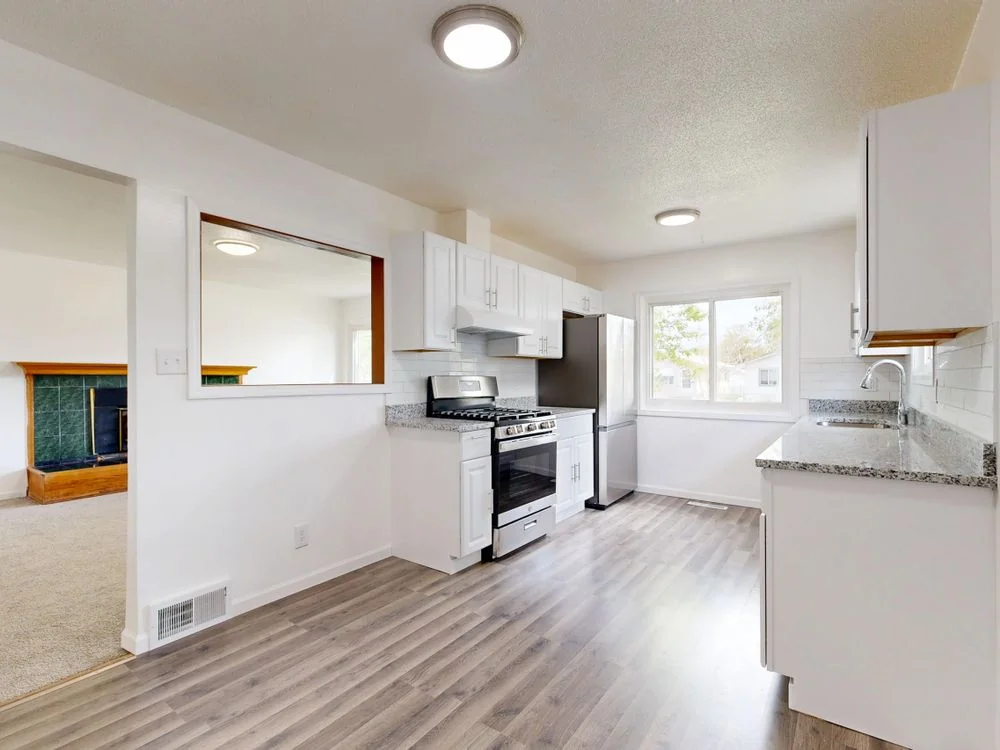
If you need more room, compare a home addition and a move against the same list of needs: the space you would gain, the total cost, the time involved, and what daily life would look like afterward. An addition may make sense when you like your home and location but need a bedroom, larger kitchen, office, or gathering space. Moving may make more sense when the problems extend beyond what an addition could reasonably change.
Neither choice is automatically cheaper or easier. The useful question is which path gets your household the home you need, with tradeoffs you are willing to accept.
Start with the problem you need to solve
Write down what does not work today before looking at floor plans or listings. Is the kitchen too tight when several people cook? Do you need a separate place to work? Is the family room crowded, or do you need another bedroom? Distinguish must-haves from improvements you would enjoy but could live without.
Then ask whether more square footage would actually fix the problem. A kitchen extension might create room for better circulation and storage. But if you also want a different setting or a home with a fundamentally different layout, an addition could leave the larger issue unresolved. Property ReVision designs and builds additions including kitchen extensions, bedrooms, family-room expansions, offices, and second-story spaces; the right scope depends on the existing home and your goals.
What would each option really cost?
Compare complete scenarios, not an addition estimate against the asking price of another house. For the addition, account for design and construction, work needed to connect the new space to the existing home, finishes, and any changes to rooms the addition affects. Ask what the proposed scope includes and which decisions could change the budget.
For a move, include purchase and sale expenses, moving costs and repairs the next house would need. Ask the appropriate real estate and lending professionals to help you develop that scenario. Compare it with a defined remodeling proposal.
Compare the same four things for both options:
- Upfront cost: For an addition, include the full remodeling scope. For a move, include buying and selling expenses, moving costs and repairs the next home needs.
- Monthly expenses: Compare how each option could change your housing costs and other household expenses.
- Usable space: Compare the rooms and layout an addition could provide with those in homes you would realistically buy.
- Unknowns: For an addition, consider the existing home’s condition and unresolved design decisions. For a move, consider available homes, sale and purchase terms, and work needed after moving.
Avoid treating either option as a guaranteed return on investment. A room that meaningfully improves daily life may be worth considering even if you cannot predict how much of its cost a future sale will recover.
Can the existing home accommodate the addition you want?
Have the team assess the site, structure, utilities and how the addition would connect to existing rooms. A kitchen extension should improve cooking zones, storage and movement through the home. Ask whether a layout renovation could solve the problem without adding space.
Most home addition projects require permits, and Property ReVision helps manage that process. Before relying on an addition as your answer, have the proposed scope evaluated against the home’s conditions and applicable requirements. If the workable design cannot deliver your must-haves, moving may be the better comparison—even if you would prefer to stay.
For a closer look at the kinds of spaces the team builds, see Property ReVision’s home additions service.
Which disruption fits your household better?
An addition preserves your location but brings construction into daily life. Ask which rooms will be unavailable, whether you can remain at home and whether temporary accommodation belongs in your budget. Property ReVision’s project manager leads construction, and clients follow schedules, selections, budgets and correspondence in CoConstruct.
Moving avoids construction in your current home, but it brings its own sequence: preparing to sell, finding a suitable property, coordinating transactions, packing, and settling in. A new home may still need changes. Compare the whole path to usable space, not simply a construction period against a move date.
Make the decision with two realistic options
An addition is worth exploring when you want to stay and can describe a specific space that would solve the problem. Moving deserves serious consideration when your must-haves reach beyond the house or when a workable addition cannot meet them.
Compare a feasible addition with homes you would realistically buy. Include the changes those homes would still need. If you obtain multiple remodeling proposals, compare their scopes and assumptions.
Property ReVision offers a free initial estimate, followed by a proposal review with a detailed proposal and 3D rendering. To discuss your space needs in Southeastern Wisconsin, request a free estimate.